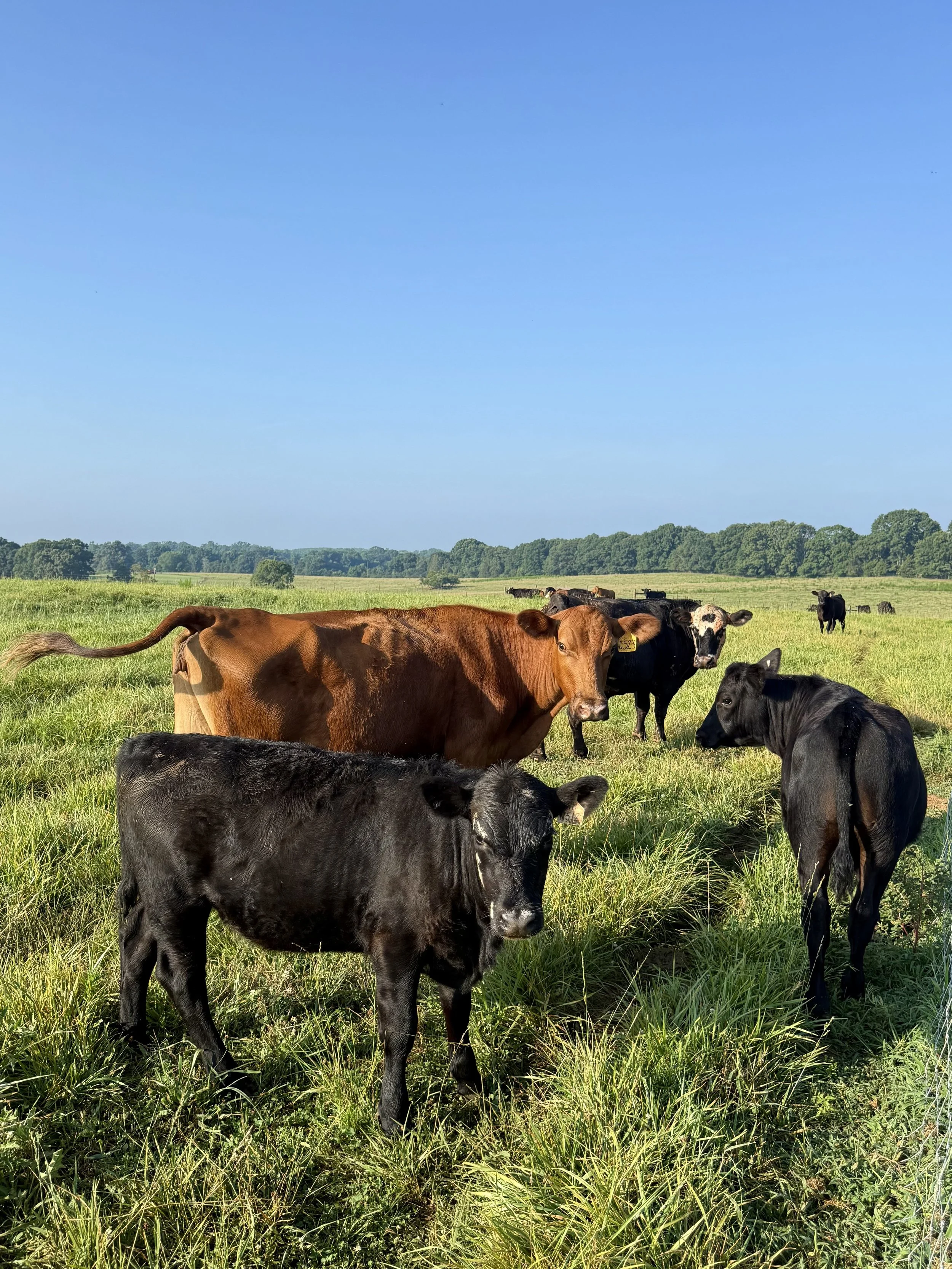
The Cattle Crisis
It’s the elephant on every cattle farm right now so let’s talk about it…. the U.S. just decided to import beef to decrease beef prices. More specifically, on August 21, 2026, Trump announced the U.S. will allow up to 300,000 metric tons of ground beef to be imported over the next 90 days without being subject to out-of-quota tariffs, with the imports reportedly sold at 25% below market prices. In pounds, 300,000 metric tons works out to roughly 661 million pounds. Not to mention in January 2026 we had changes in the United States where imported beef can be sold without any claim of origin at all labeled on the package. This means that as a consumer in a commercial grocery store you may or may not be able to tell where your beef is coming from. Not to mention, that importing beef means that we carry a highly increased risk of importing bacteria or disease. While many consumers do not see an issue with this we believe that transparent labeling is essential and that consumers should decide if they want U.S. raised beef or imported beef. In this time, the only way you can guarantee where your beef is coming from is to shop directly from the farmer. There are so many great local beef farms that still exist in the U.S., but the only way that they continue to survive for the next generation is if the consumer makes a choice that value and transparency is worth more long term than the short term financial gain.
The Bigger Picture
In 1975 we hit a record high herd number in the United States at 45.7 million. Since then, we have steadily declined to the point that by 1987 the number was already down to 31.7 million. By January 2025 we hit 27.86 million which was the lowest number we have seen domestically since 1961. When we pair this with the statistic that 2% of U.S. farmland is expected to be sold in an arm's-length transaction (buyer and seller unrelated) in a given year, out of 911 million acres total in the lower 48 states that works out to roughly 18 million acres per year changing hands as genuine market sales it becomes abundantly clear we have a food system issue in the U.S. The problem is , if we don’t address this issue today there will be a crisis in the next decade. Let’s dive in deeper why importing this massive amount of beef at below market prices is such an issue…
Ranchers only hold back heifers instead of selling them when the expected payoff from a future calf outweighs cashing in on today's record-high prices. A heifer retained in fall 2025 and bred in 2026 won't calve until 2027, with that calf not entering beef production until 2028-2029 — so retention decisions are a multi-year bet on future profitability. Flooding the market with 300,000 metric tons of cheap, tariff-free imports sold directly undercuts the price signal that would otherwise reward that bet. If ranchers see the government stepping in to cap prices whenever they rise, the incentive to sacrifice near-term cash flow for a multi-year rebuild weakens. Not only does this hurt existing cattle operations and deter them from rebuilding and revitalizing their herd it also has a negative impact on young students considering entering the cattle industry. When they cannot see a long term plan for profit and success it makes entering the farming and agriculture sector feel unattainable as a career path.
We recognize that the cost of living and cost of food is extremely high for the average American family right now. With diesel prices soaring at over $5 per gallon this is not looking to change anytime soon. The truth is local farmers cannot compete with commercial operations, and this gap will become even more apparent with the price cuts that are coming with this imported beef. Sadly, we are at a crossroads in our country where consumers will choose to put their hard earned dollars behind local farmers and ranchers rather than cheap imported beef or the reality is that we will likely continue to see multi- generational farms in the U.S. dwindle in herd size or be sold off to commercial entities.
We don’t want to be insensitive to the issue of rising food costs and are working tirelessly to come up with ways to make buying local more and more affordable to our community during this time.
In this effort, we want to put forth our ground beef boxes to give consumers a viable option that they can depend on and trust in.
12lbs of ground beef for $99
15lb of ground beef for $120
Call or visit the store anytime to secure your box! If you aren’t local to our area please reach out and we will be more than happy to help connect you to a local farmer.